Content Warning: The blog discusses some of the events of Bonnie Garmus’ and Apple TV’s “Lessons in Chemistry.” Subjects include misogyny, homophobia, sexual assault, suicide, tragic deaths, and religious and other forms of domestic abuse.
Alle Dinge sind Gift, und nichts ist ohne Gift; allein die Dosis macht, dass ein Ding kein Gift ist.
All things are poison, and nothing is without poison; the dosage alone makes it so a thing is not a poison.— Paracelsus, 1538
It’s incredibly difficult to write a character that’s smarter or more educated than yourself. The smartest people I know make connections that I don’t see, and how could I replicate that in a book or screenplay? So, when I was younger and would write scripts for fun with my buddies, we would take obvious shortcuts to make a character seem smarter by copying and pasting descriptions of scientific terms into their dialogue. We learned we weren’t the only ones who’d discovered this hack.
There’s a Jimmy Neutron meme circulating online from the episode “Men at Work,” in which Jimmy Neutron, Boy Genius, gets a job at the local burger joint, McSpankies. He gets into a minor argument with management when he refers to a packet of salt as “sodium chloride.” The manager, being a dumb idiot, disagrees with him, saying, “No, dude, it’s salt.” The two go back and forth like this, playing the chemical version of “Who’s on First?“
This scene has been memed to death for a lot of reasons, but it seems that the assumption that McSpankie’s manager doesn’t know what sodium chloride is rankles some people. Probably due to the innate condescension in assuming someone who works in Fast Food wouldn’t know a basic fact. Anyone who remembers high school chemistry knows that sodium (a highly reactive metal) and chlorine (a reactive gas at room temperature) combine to make the harmless sodium chloride. It’s a great intro-to-chemistry lesson because it shows how two “dangerous” elements can combine to make a common substance. Very few chemists outside a lab will refer to table salt as sodium chloride, because it’s needlessly complicated when the term “table salt” is understood by everyone. And yes, table salt often contains more than just sodium chloride.
If I went to a restaurant and asked for a glass of dihydrogen monoxide, or H2O, not only would I look like a pretentious jerk, but that would be confusing. Am I asking for a glass of tap water, which is what I really want, or a glass of distilled water? If I want tap water, I’ll ask for tap water. If I’m in a lab and need distilled water, I’ll say, “I need distilled water” (I haven’t been in a lab in over 12 years, but let’s assume there’s an apocalypse or something that wipes out all of Earth’s scientists).
The purpose of science isn’t to prove you’re the smartest person in the room. You need to communicate in a way that other people, fellow scientists or not, understand you. Unfortunately, I don’t think many writers get that.
The show “Lessons in Chemistry” is a 2023 Apple TV production based on Bonnie Garmus‘ book, in which a female chemist slowly changes her traditionalist 1950s society by hosting a science-themed cooking show. Played excellently by Brie Larson, the main character, Elizabeth Zott, bravely challenges stereotypes about women’s roles in the home and the workforce. The show received rave reviews, and after watching 90% of it through YouTube shorts, I bit the bullet and watched it for myself. Eight episodes later, and while I was definitely entertained, I also felt unsatisfied. For the record, I think the show is better than the book, which is rare. However, there were too many small moments in the series that gave me pause, as someone who enjoys period dramas and is also a former biology student.
Bonnie Garmus’ “Lessons in Chemistry” is a difficult read. Not because it’s too “sciencey,” but because of the relentless misery present in the book. The main character, Elizabeth Zott, is a brilliant, if somewhat socially inept, scientist whose life is undermined and steamrolled by a series of unscrupulous men (and sometimes complicit women) and tragic circumstances. Her brother, whom she idolized, was a gay man who committed suicide when they were still young. Zott was pursuing her PhD in chemistry when her monstrous advisor assaulted her, leading to her expulsion after defending herself.
I remember reading that part of the book and feeling cold and nauseous. Despite being aware of the horrors women have faced while trying to achieve their academic dreams, it was still upsetting. I remember telling myself, “Even though this story is fictional, there are women who have been treated this way, so don’t forget.” It was a heavy start to the book, making it difficult to continue reading, especially when so little seemed to go right for the characters.
So much of Elizabeth’s life is terrible. She’s chronically maligned, she’s mistreated at work, the love of her life dies in a random, traumatic accident, and she’s eventually fired from her job for getting pregnant. I think Count Olaf makes an appearance at one point. It’s not a stretch to call her character “Dickensian.” Things eventually, sort of, work out for Elizabeth, like when her show becomes super popular, and she’s able to return to her abiogenesis research, but it’s a long road.
While the show certainly adapts most of the sad events from Elizabeth’s life, the narrative also weaves in enough happy moments, like her brief time with Calvin and her friendship with her neighbor, Harriet, that the sweetness tempers the bitterness. It helps that the casting was nearly perfect. Every actor helped bring the good and the bad of their characters to life. I cannot praise Brie Larson enough for her portrayal of Elizabeth Zott, turning a character I struggled to connect with into someone I would tune in to watch every day. Lewis Pullman was wonderful as Dr. Calvin Evans, Elizabeth’s love interest, who embodied all of Book-Calvin’s quirks in a way that felt completely natural. Stephanie Keonig, Aja Naomi King, and Kevin Sussman were also great additions to the cast.
My issues were never with the cast, their acting, or even with any of the narrative changes, which, in my opinion, significantly improved the story. But I would like to take issue with the actual “chemistry” of “Lessons in Chemistry.”
To reiterate, I am not a chemist. I have taken advanced chemistry classes (and even failed a few of them), and I’m interested in pursuing science communication as a career, which involves a lot more psychology and media analysis than, say, working as a chemist at Genentech. While I’m far from an expert, I’m not ignorant to the science present in this book. Before writing this blog, I also tried to find a few chemists online who’d watched the show or read the book. Their opinions were similar to my own.
Science misinformation happens all the time in movies and on television. To achieve the exciting storylines we see in most science fiction and fantasy series, we need to be willing to suspend our disbelief and not get too caught up in the particulars of a story. For example, “The Martian” is a funny, gripping tale that’s lauded for its scientific accuracy, except for one moment: the initial storm on Mars – the very one that strands Mark Watney and starts the events of the book – is extremely unlikely to occur. The author, Andy Weir, had to take some creative liberties for his story to even take place, and that’s fine. I don’t take issue with that, or with the nonsense that comes out of shows like “Futurama,” which comically explores scientific concepts and science fiction. I doubt anyone is going to watch “Futurama” and then try to invent their own smell-o-scope.
What I do take issue with is shows and movies that showcase intelligent characters as scientific authority figures only to have those characters make untrue statements. My go-to example of this is Morgan Freeman in the 2014 film “Lucy,” who played a scientist and professor and said that humans use only 10% of our brains. The “10% of our brain” myth is exactly that- a myth. Sure, we have a long way to go before scientists can fully unravel the brain’s mysteries, but we use way more than 10% of it every day. It’s lazy and irresponsible to use a myth like that as the basis for your film.
“Lessons in Chemistry” presents Elizabeth Zott as an expert in all things chemistry. She’s not only smarter than all of the chemists in her department, but she’s even better than Wunderkind Calvin Evans, the star of Hastings Laboratory. So when she says anything about chemistry and science, viewers will listen. And when I say “viewers,” I’m not just referring to the housewives on screen.
Elizabeth regularly makes bold claims either for or against the products of her time. One of the main struggles of her show is finding sponsorship, as she refuses to work with any food products that do not meet her standards. So, when her well-meaning producer gets the show sponsored by an instant soup brand, this is what she says:
“Presto Soups. Cooks so quick, it’s done in a presto. That’s my line. It is a real time-saver. And that’s because it’s full of chemicals. And not the good kind… Feed enough of it to your loved ones, and they’ll die off, saving you tons of time because you won’t have to feed them anymore.”
It’s fine if you don’t enjoy the taste of a product, but it is dangerously irresponsible to say it’s bad because it’s full of “chemicals” and that it will kill your loved ones. Also, you’re a chemist – everything is chemicals. You have to be more specific when you tell people which ones to avoid.
In the fifth episode, while grocery shopping, her daughter picks out a cereal that contains the synthetic preservative butylated hydroxytoluene, or BHT. This chemical is used to prevent oxidation in fluids, and according to the FDA, it is generally recognized as safe to eat and has been shown to be noncarcinogenic (so far). It is being phased out as a food additive, and the Food Babe hates it. So does Elizabeth Zott, as she says to her daughter,
“‘Butylated hydroxytoluene.’ A good rule of thumb is not to eat foods that share ingredients with jet fuel.”
I don’t drink gasoline, but I do eat sourdough bread, and both share a common ingredient: ethanol. Or, you know, alcohol, or booze. Which can be safe if consumed in small doses; otherwise, most Americans would be dead before their 21st birthday. Something edible sharing an ingredient with something inedible doesn’t automatically make that ingredient poisonous.
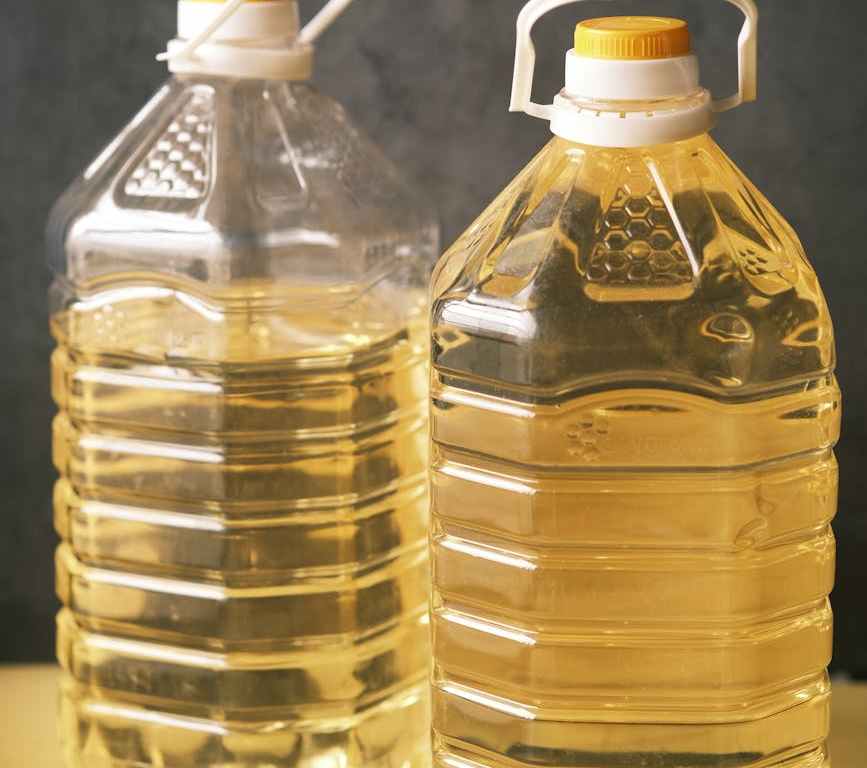
Later, Elizabeth gets into trouble with station management again for refusing to use a Crisco-like product. Crisco, for the uninitiated, is a shortening made out of vegetable oil, although it was originally made with cottonseed oil. The point was to create a product that could serve as a lard substitute, since animal products are expensive and have a shorter shelf life. Cottonseed oil was extremely popular in cooking because it was inexpensive to use but produced products with great flavor. However, in 2015, the FDA determined that Partially Hydrogenated Oils (PHOs), including partially hydrogenated cottonseed oil, are not “Generally Recognized as Safe.” The Crisco-like product Elizabeth hates is made from hydrogenated cottonseed oil. However, Elizabeth makes several blanket statements about the evils of seed oils and touts beef tallow as the more nutritious alternative.
This is misleading. Sure, beef tallow may contain nutrients not present in vegetable oil-based shortenings, but it’s expensive, high in saturated fat, and processed. Cottonseed oil may not be amazing for you, but beef tallow is hardly a kale salad. In the last episode, Elizabeth says this to her audience,
“I know that everyone doesn’t stand for what I stand for, but our convictions mean nothing if we don’t voice them. Swift & Crisp is vile on a sub-chemical level. Seed oils are damaging to your mitochondria. And the fact that I told you to put that in your body will haunt me for the rest of my days.”
This is a terrifying claim she presents with no evidence.
What I don’t appreciate is that once she makes this claim, the burden of proof suddenly falls on me to show that seed oils aren’t that bad. And the truth is, I do not know what impact seed oils have on your body because I am not a biochemist. Biochemists spend years researching these topics and are much better suited to responding to this claim. Regarding the claim that seed oils damage your mitochondria, based on my limited understanding, I found a paper that recommends reducing seed oil consumption. All of the other sources were from wellness influencers trying to sell their own products and random health-themed websites with no credentials.
Maybe I’m all worked up because Skippy Peanut Butter is the only reason I get up in the morning, and that crap is full of PHOs, but if you try to claw that plastic jar out of my iron grip, I’ll fight back like a raccoon on bath salts.
Maybe I’m also concerned because a terrifying number of people currently in office are wildly underqualified for their roles, holding less scientific knowledge than a fifteenth-century alchemist trying to convert lead into gold.
Elizabeth Zott’s comments bear a striking resemblance to those of Robert F. Kennedy Jr., the current health secretary, who has claimed that Americans are being “unknowingly poisoned” by seed oils. Nutrition scientists have confirmed the safety of seed oils, which are high in omega-6 fatty acids and low in omega-3 fatty acids. Our bodies need both. The common claim is that seed oils will increase inflammation in the body, but that has been debunked.
Seed oils are not the enemy. In many circumstances, seed oils can be a “healthier” alternative to animal fat. The term “healthy” is extremely relative, and I hate throwing it around mindlessly. There’s another common phrase that’s more relevant: the dose makes the poison. This means that any substance, even water and oxygen, can be deadly if consumed in excess. There’s a time and place for everything, and how “healthy” a food is depends heavily on the circumstances. Sometimes your body needs water. Sometimes it needs salt. Or it needs protein, or iodine, or whatever, because all food is relative.
I’m not saying you should eat a bucket of Crisco or snort BHT. If you choose to avoid those products, that’s fine.
Food science is fascinating (there’s a reason Alton Brown’s “Good Eats” lasted as long as it did). The show’s writers had many opportunities to demonstrate how well Elizabeth understood her material. Elizabeth could have explained why olive oil is stored in green bottles (the color of the glass prevents the sun from turning the oil). She could have mentioned the benefits of using a pressure cooker, which, due to the high pressure inside the container, allows the water temperature to rise well above boiling without turning into steam. In the episode where she hates instant soup, she could have shown how she would can her own soup to make it shelf-stable, thus democratizing the process and making it accessible to audience members who may not have learned how to do so. There were so many missed opportunities to discuss food science in this show, which is ridiculous considering it was one of the most interesting parts of “Lessons in Chemistry.” Unfortunately, the writers didn’t just take the lazy approach by copy-pasting chemical names when common ones would suffice; they also made several unscientific claims that could really scare viewers at a time when nutrition misinformation is running rampant.
What I find particularly frustrating is that now the burden of proof is on me to disprove all of Elizabeth’s claims, when it should be the other way around. She’s supposed to be the smartest chemist in the world, yet she regularly makes bold scientific claims with no evidence. She should have to prove that canned soup will kill you and seed oils are organelle assassins. Instead, I’ve spent days of my life researching each of these claims to see if any of them are true. And the thing is, there often is an element of truth in misinformation. That seed of truth, which is then distorted and misunderstood, is what makes the false claim so believable and also so difficult to disprove.
If you like cooking with beef tallow, then all power to you. Different strokes for different folks. But when we loudly proclaim certain foods as “bad” and others as “good,” we’re not doing the listening audience any favors.
Despite all this, I’d still recommend “Lessons in Chemistry” as a good watch. As much as I criticize the chemistry, the feminist storyline and emphasis on the importance of social allyship mostly outweigh that. There are scientists who enjoyed the show despite these inaccuracies, so even if you do have an advanced degree in Physical Chemistry, you still could like it. Let’s just hope this message reaches Apple TV and they hire real scientists to consult before airing untruths to millions of viewers.


The video you linked mentioned this already, but the ‘conflict of interest’ clue is such a great tool to assess information. I’m reminded of Dale King of the Hill: “Always follow the money.” (Ignoring the fact that Dale is wrong about virtually everything, to a comedic degree. The quote is still good!) When I hear about the “dangers” of seed oils and the “healthy” alternatives of meat and dairy being offered as the solution, it makes me wonder how much the meat and dairy industry have to gain here. Same with the whole “Got Milk?” thing and “BEEF: it’s what’s for dinner” thing. The meat and dairy industry has spent so much time, effort, and money advertising their product everywhere, it makes me jaded. Am I really supposed to think Seed Oil is bad, or I am just supposed to buy Beef Tallow? I don’t really know, to be honest. (I guess that’s why science and research communication is so important tee hee).
On a side note, I love Good Eats! I have heard that Mr Alton Brown is a bit of an ass to work with (claims unverified, I’m going off of rumors), but I think the show holds up. (*alarm bells chiming* THIS IS NOT AN ART VS ARTIST DISCUSSION THIS IS NOT AN ART VS ARTIST DISCUSSION)
Good post! I doubt I was going to watch Lessons in Chemistry anyway, but it’s still fun to read about.
LikeLike