
Content Warning: Spoilers for basically every book Rachel Reid has written, as well as Jacob Tierney‘s adaptation of “Heated Rivalry,” which has a ton of explicit content in it, so don’t watch it with your grandma.
After a friend of mine, an older gay man, told me I needed to give the Canadian sports romance “Heated Rivalry” a second chance, I was hooked. I watched the series, then rewatched it, and then checked out the books at a friend’s recommendation. Two months later, I’ve read and listened to all of Rachel Reid‘s books (and her blog and an obscene amount of fanfiction), and I was surprised by just how much I liked them.
It’s easy to write off romance as a vapid genre with unrealistic characters and experiences, and I do agree that romance novels can be a bit too trope-dependent, but the reality of the genre is more nuanced than that. There is a lot of depth to Reid’s books, like the focus on homophobia, mental health, and toxic masculinity within sports culture, specifically hockey. Her characters often struggle to reconcile their extremely public personas with their inner selves, and the conflict that arises from deviating from what’s expected of them. Despite their occasionally dark subject matter, the sweet love stories within have been a comfort to me over the past few months. Even the books I rank lower on my list are still “good.”
While I’m far from the first person to do this, given how starved I am for content during this torturously long period between seasons 1 and 2, I figured I’d add my thoughts to the cacophony of internet noise and see if they reach anyone who may be interested. So without further delay, I present to you my ranked list of the “Game Changer”/”Heated Rivalry” books.
Last But Not Least: Common Goal (4th Game Changer)
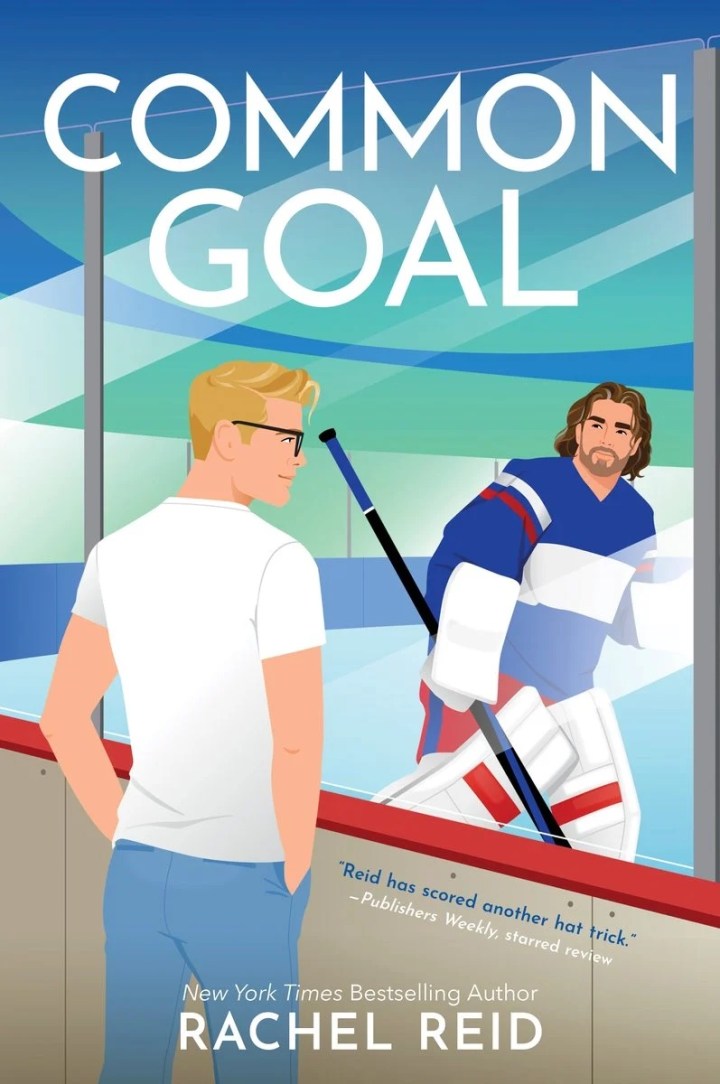
This book is like an unofficial sequel to “Game Changers” in that it’s about two minor characters from book one: Kyle “Thank You, Kyle” and Eric Bennett, Scott Hunter’s formerly married teammate. After going through a bland divorce with his wife, Eric wants to embrace his bisexuality and start dating men. As he’s approaching 41, he’s also keenly aware that retirement is just around the corner. Meanwhile, Kyle is nursing an unrequited crush on the very monogamous Kip Brady (there is no polyamory or ENM so far in the series), and strikes up a friendship of sorts with Eric. After some back-and-forth, the two become friends with benefits as Kyle shows Eric the wonders of gay sex.
The main conflict is that Eric doesn’t really know what to do with his life post-hockey, and also doesn’t want to be that divorced, older creep who dates 25-year-olds. Which is, you know, fair. The relationship between Kyle and Eric isn’t exactly uneven, what with Kyle being far more sexually experienced than Eric, and coming from a wealthy family and therefore not financially dependent on Eric (unlike Kip and Scott, who will never be in the same financial stratosphere, causing near-constant friction). Eric eventually gets over himself and starts seriously dating Kyle, and they’re happy enough, but age gaps are still gross.
Game Changer (1st Game Changer)
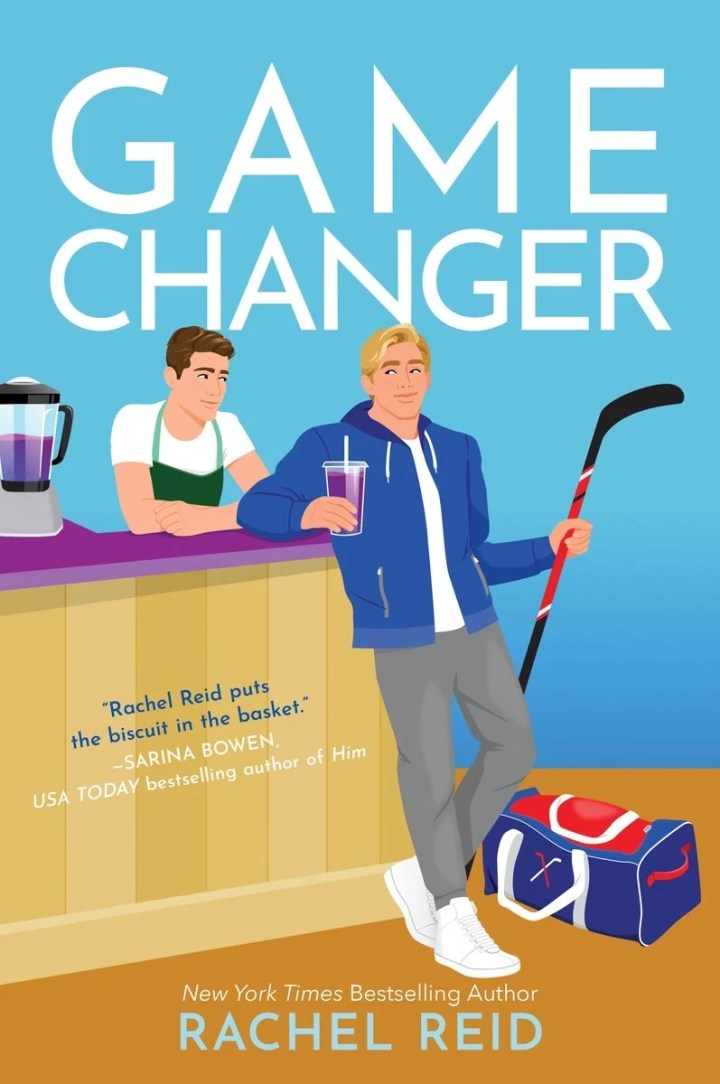
A closeted hockey player, Scott Hunter, starts crushing on a hot barista, Kip Brady, at a smoothie shop. Kip reciprocates, and their relationship moves at lightning speed, with Scott declaring his love for Kip after like, five minutes of dating (calm down, Scott). Anyway, the big issue is that while Kip is out and relatively normal, Scott’s workplace is dripping in homophobia and toxic masculinity, necessitating him keeping his romance under wraps. Kip feels weird about being a pampered, secret sugar baby and wants to get a burger with his boyfriend without it being a whole “thing.” If my good-looking, rich, secret boyfriend were willing to pay off my bills, I’d hand him my routing number, but money won’t buy Kip’s love, and he doesn’t want to hide away. Scott realizes he wants to come out (not just because of Kip), and so he does. Scott gives Kip a smooch on center ice after winning the World Cup, and they live happily ever after.
This book is worth reading just for the cascading effect it has on the rest of the series, as Scott’s public actions embolden many other characters to be themselves. My tepid reaction to this book may also be related to the eardrum-shredding, nightmare-inducing Brooklyn accent the audiobook narrator gave Kip. That dude made him sound like the slow-witted henchman to a mafioso from a Don Bluth movie. Jesus, please pay the actors from the TV show to rerecord those books.
Time to Shine/The Shots You Take (Stand-Alones)
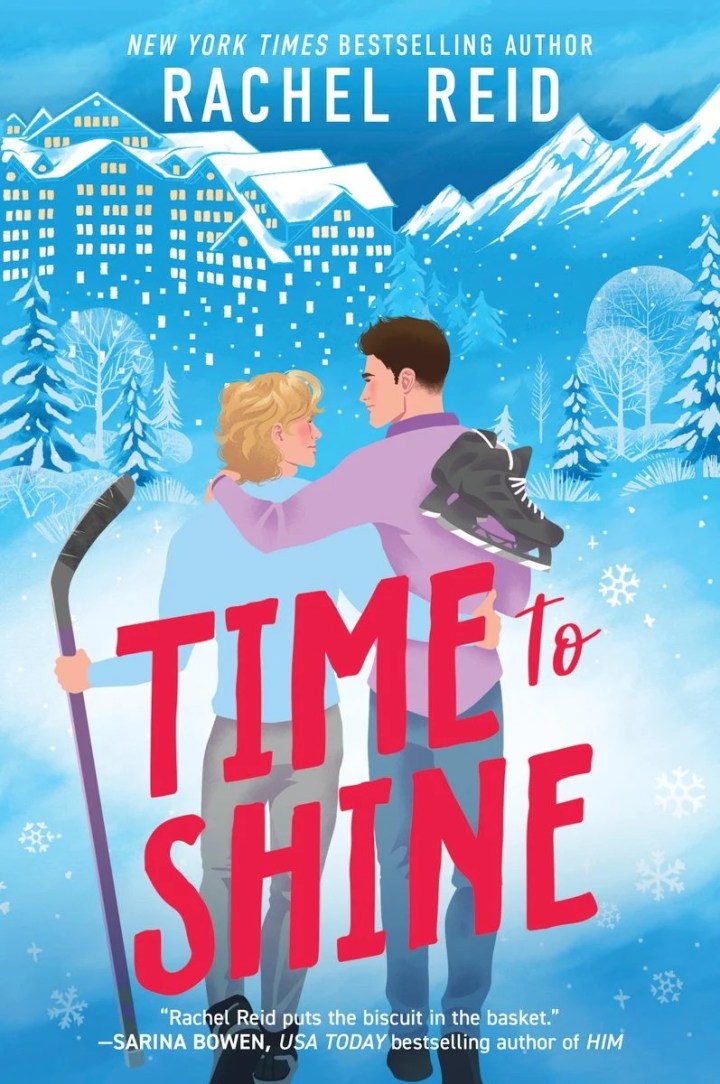
All of the books have an emotional impact, but I found these two especially packed a whallop. In “Time to Shine,” Landon Stackhouse is a shy, closed-off goalie who’s given his big moment to take the place of an injured goalie on an NHL team in Calgary. He meets Casey Hicks, a goofy bisexual cutie pie, and is smitten (and vice versa). ‘Tis the season to fall in love (and to come out to your parents and address your unspoken grief over your deceased sibling). While all of the books made me feel things, the descriptions of Landon’s family coping with the loss of his sister got to me, and I was a teary mess.
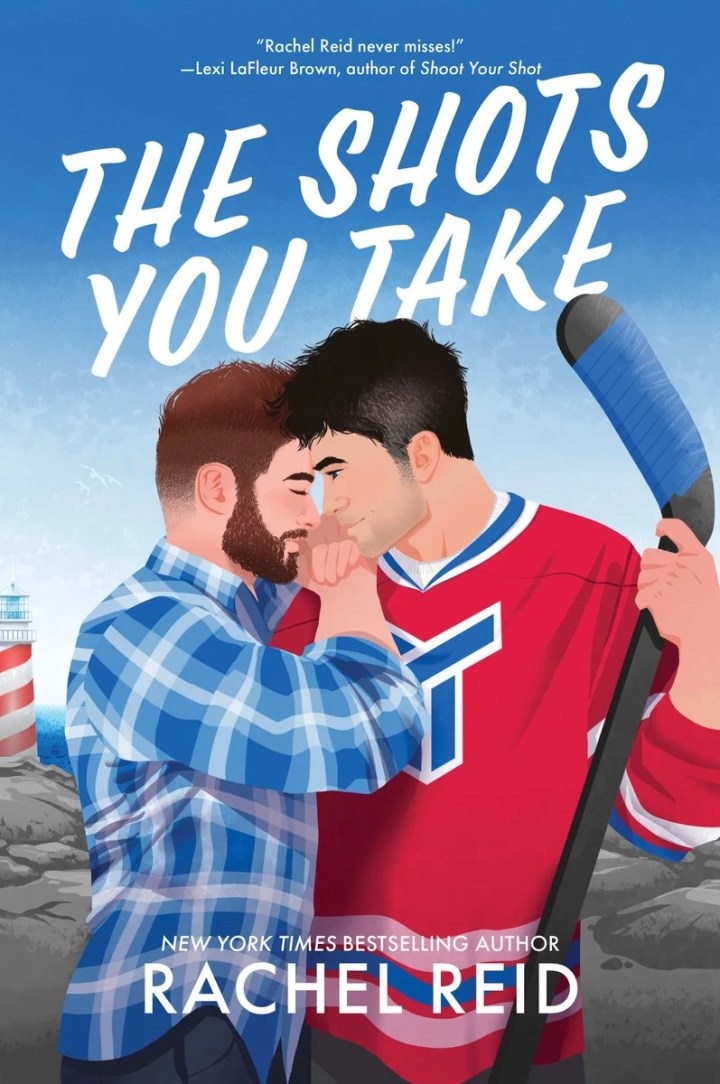
In “The Shots You Take,” Riley Tuck’s father dies, and his former bff/teammate/flame, Adam Sheppard, comes to Nova Scotia for the funeral. When Adam and Riley were in their early 20s, they would hook up on the down low, and while Riley very much wanted to date seriously, Adam was in denial about his sexuality and his love for Riley. Now, almost 20 years later, Adam is divorced, out of the closet, and wants to make amends (and maybe be more) with Riley. Normally, I would argue against reentering someone’s life when they’ve lost a beloved family member, as they’re at their most vulnerable, but Adam is willing to put in the work and be there for Riley when he needs him most. Despite Adam’s past horrible behavior, I found myself rooting for him and Riley.
Tough Guy (3rd Game Changer)
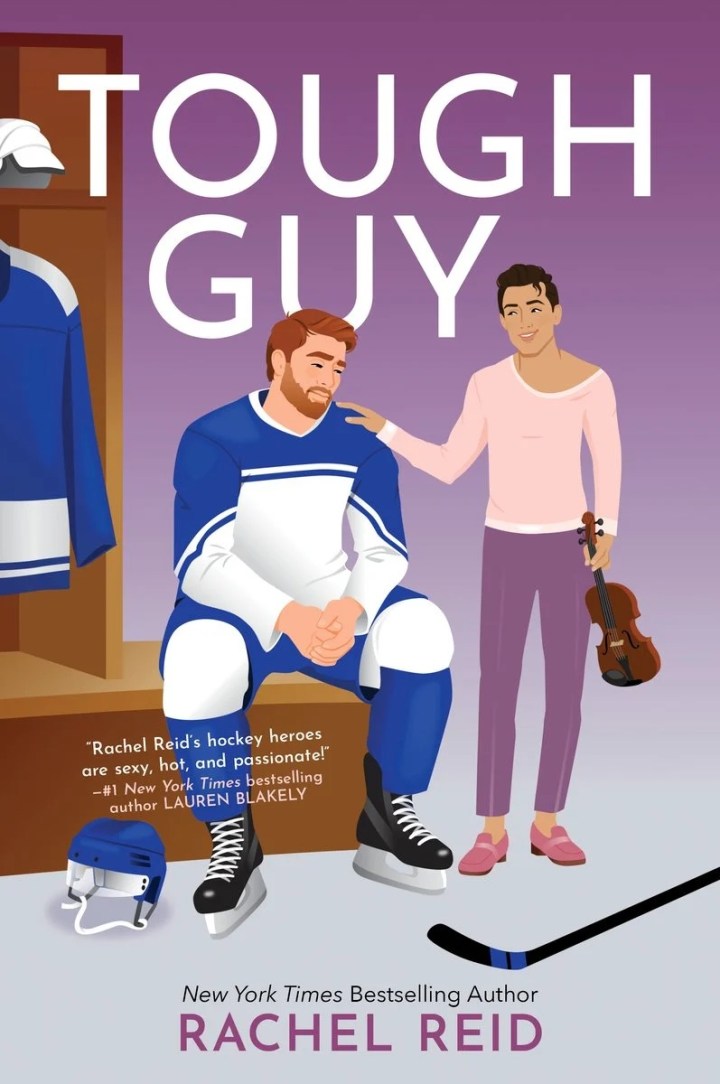
Please ignore the terrible cover and know that Fabian Salah is supposed to be like, ethereally beautiful.
Ryan Price is a mountain of a man whose literal job is to beat people up in hockey games. He’s known for his fearsome reputation as an enforcer on the ice, but inside, he’s a softie with severe anxiety and flight phobia. After being traded to Toronto, he reconnects with Fabian, an old friend from his high school days, and this tentative friendship evolves into something more romantic. This is one of those few books where the main character being 6’7″ makes sense – it’s his literal job to be a giant, scary man. The true conflict in this book is that Ryan’s identity and sense of worth are tied to his career, even though his job is destroying him in body and soul. Fabian comes from a family obsessed with hockey, and now, somewhat understandably, he despises most hockey players and the toxic culture that surrounds it. I really liked Ryan and Fabian, and how they initially seemed like such dissimilar people but were increasingly aligned in their values. I also liked how Ryan’s “happily ever after” included leaving professional hockey and finding something else that would let him stay somewhat connected to the sport he loved, without putting his health on the line.
I did not, however, like it when Fabian and Ryan referred to sexy time as “playing.” Using the word “play” in that context is up there with describing a stretch as “delicious.”
Heated Rivalry (2nd Game Changer)
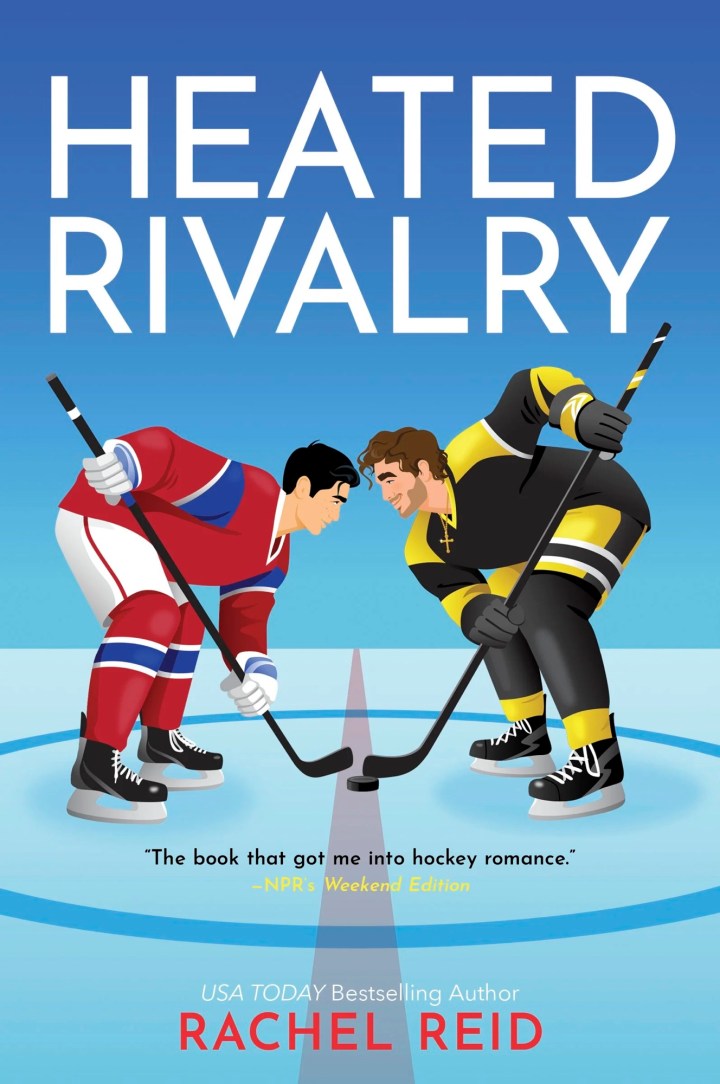
If “Game Changers” is the cute boy-meets-boy story, “Heated Rivalry” is the epic, years-long tale of forbidden love. Shane Hollander and Ilya Rozanov first met as junior hockey players. Like every great love story, it began with Shane introducing himself, and Ilya orchestrating a situation in which he could jerk off in front of Shane.
When Shane and Ilya meet, they seem like such complete opposites that watching them clash is exciting. Ilya is confident in his bisexuality, whereas Shane struggles with accepting his sexuality, taking years to come out. Shane comes from a supportive family, had a safe upbringing, and is genuine in his interactions with others. The same cannot be said for Ilya, who is so guarded in his interactions; no wonder it took literal years for him and Shane to get together.
If Ilya Rozanov were a real person, he would be a walking red flag. Tom Cardy’s “Mixed Messages” plays whenever he enters the room (and Taylor Swift plays when he leaves). He’s built these impenetrable walls around his heart, and despite insisting his sexual situationship with Shane is “simple,” he’ll go all Miike Snow “Genghis Khan” when Shane tries to have an actual relationship. He’s the guy your friend dates on-and-off and always complains about, and you’re constantly like, “So why do you still talk to this guy?” and they might have a bunch of excuses, but the honest answer is “he has a good dick.” Which, like, I get, but that’s not the kind of guy who will go in on a Costco membership with you. I like Ilya, and I think he’s a good guy, but I just wish he would occasionally use his powers of rizz and perception for good instead of evil.
Anyway, turns out Ilya is that rare exception because he genuinely loves Shane and is willing to uproot his entire life for him. Somehow, over the years of banging, the boys caught real feelings for each other, culminating in a two-week trip that basically has them planning their lives together, admitting their undying love, and coming out to Shane’s parents. It’s a lot. But they’re finally able to admit they actually like-like each other and want to be together, which is a good start.
Role Model (5th Game Changer)
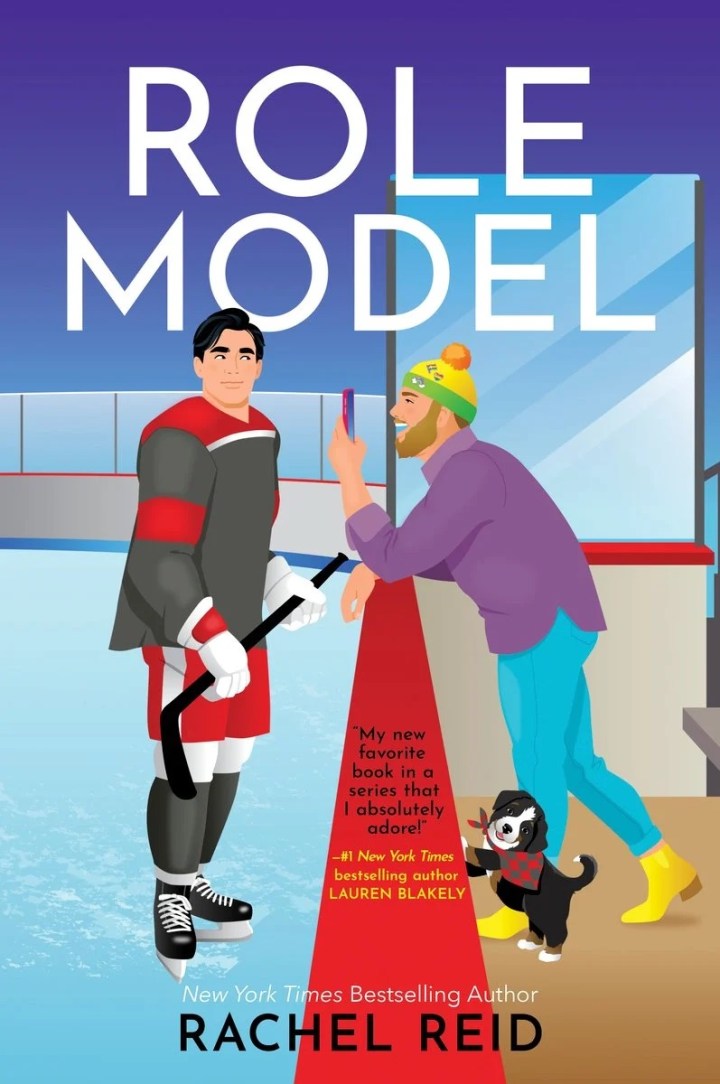
Role Model deals with some of the darkest subject matter in the series. Troy Barrett, a closeted hockey player from Toronto, spent the first few years of his career buddying up with toxic homophobes in the league in a bid to hide his sexuality and earn the approval of men like his father. When he learns that his “best friend,” star Dallas Kent, was anonymously accused of sexual assault, he knows the accusations are true and publicly calls out Kent. For this, he’s punished, as the league rallies around Kent, ignoring the accusations, and trades Troy to Ottawa. He’s also nursing a broken heart, having been dumped by his shallow boyfriend, leaving him truly alone. Troy is so profoundly miserable at the start of the book that it’s hard to imagine how he could pull himself out of this pit of despair. I kept hoping his mom would fly to Ottawa to hug her son, because damn, he was unhappy and needed some TLC (and a therapist).
While Troy doesn’t get the mental health support he so desperately needs, he does meet Harris Drover, the team’s social media manager/apple dumpling come to life. Harris is so relentlessly sweet and positive, as well as openly gay and confident in his skin, that Troy gravitates into his sunny orbit. Troy and Harris slowly come together throughout the book, starting as awkward friends with crushes until they can no longer resist each other. As much as I loved Troy and Harris’ relationship, I found myself most interested in Troy’s personal growth. Troy spends this book grappling with his history as a mean-spirited bully and sycophant, kicking down those who seemed weaker than him to deflect attention from himself. In some ways, he’s like a foil to Shane Hollander. While Shane was an only child raised by loving parents, Troy’s father was a chauvinist pig whose love for Troy seemed entirely dependent on Troy fulfilling the role of a macho hockey player. Shane certainly struggled with his identity, but was still a nice person; something that Troy never did out of fear of being found out. I was thrilled to see how everyone supported Troy at the Pride Night event, and I wish I could have seen more of Troy just being happy.
Although Troy and Harris’ book ended somewhat abruptly (because they continued to be characters in “The Long Game”), I’m glad that Reid is going to write more about them in “Unrivaled,” and if she’s taking requests, the petty part of me would love to see Troy get back at his crappy ex (maybe by rubbing his cute relationship with Harris in that guy’s smug face).
The Long Game (6th Game Changer)
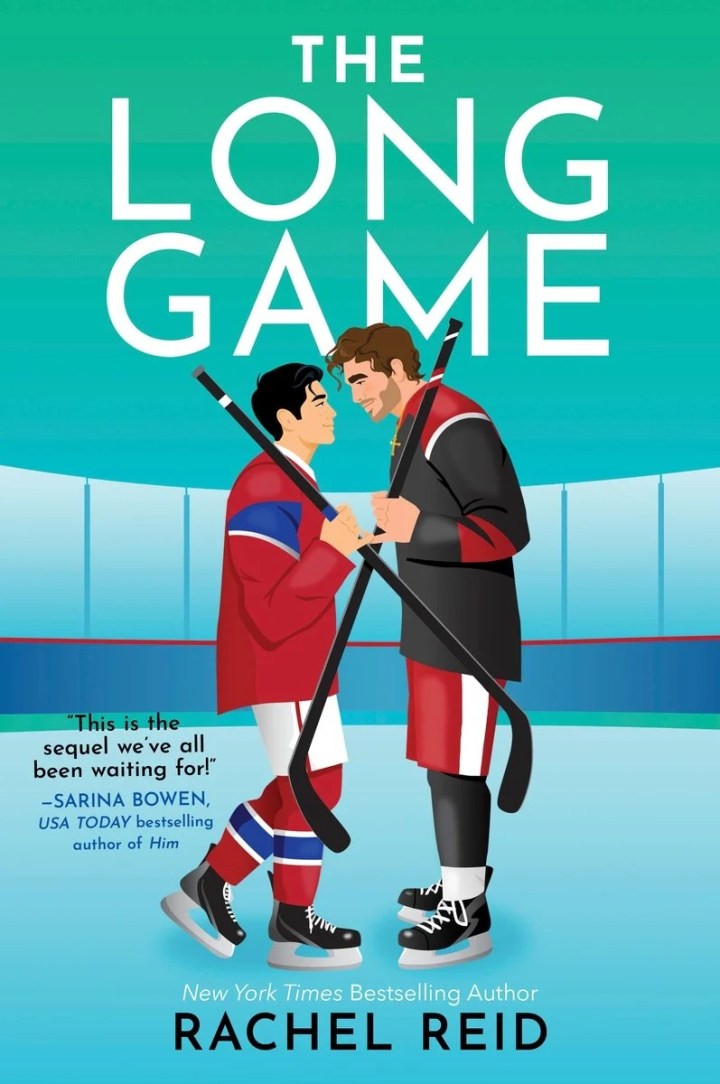
Ilya and Shane may have sorted out some of their differences at the end of “Heated Rivalry,” but “The Long Game” took the brave approach of showing how a relationship between two such different people would even work. The biggest problem with Shane and Ilya is that they’re terrible at communicating with each other. Ilya may be perceptive, but he seems to assume that Shane is a mind reader who will be able to pick up on the subtle changes in his mood and know exactly what he needs.
Meanwhile, Shane is neurodivergent and clearly struggles with picking up on certain social cues, often coming across as obtuse and insensitive. Ilya would rather cut off his own arm than be direct about his negative feelings and make Shane sad. And Ilya is bursting with negative feelings in this book, having uprooted his entire life (changing his home, career, and social circle) to be closer to Shane. And rather than admit to Shane that he’s struggling, he lets this resentment boil in the pressure cooker of his mind until he eventually snaps and loses it. Shane often comes across as the villain in the story because of his insistence on sticking to “the plan” and his unwillingness to go public with Ilya, but it’s mostly because he doesn’t realize how much his fear of exposure reads to Ilya as shame and embarrassment.
While the two eventually get their happy ending, they first have to navigate their communication chasm and the uproar their secret relationship would cause in the hockey world. And while Ilya’s team in Ottawa is staffed with nice, open-minded people, Shane’s team in Montreal is another story. Their love is clearly conditional on his always performing at his best and tolerating his being gay so long as he doesn’t actually do anything gay, like date a man they don’t like. It’s not surprising that Shane would go on an insane performance-enhancing diet that clearly reads like orthorexia in an attempt to live up to his team’s expectations. I’m excited to see how Tierney adapts this book, given how masterfully he brought “Heated Rivalry” to the screen and the sheer amount of content it contains. It’ll be a challenge, but in Jacob, I trust.
Requests for Future Books:
As much as I’m excited for “Unrivaled,” I hope that Reid considers my plea to adapt the following stories into either novellas, blog posts, or full-length novels.
Max and Leah: Max and Leah are a married couple from the Professional Women’s Hockey League. Max is transgender and no longer plays for that Hockey League, although Leah is still associated with them. Women’s hockey gets a casual mention in “The Long Game,” as Ilya Rosanov rightfully points out that Leah is objectively the best player in the room (having won more medals than all of them). I’d like to learn more about her and Max’s story, and what Max hopes to do now that he no longer works for the PWHL. Maybe he could become an actor and get cast in hockey romance shows like Harrison Browne. Even just exploring the world of women’s hockey, which supposedly can deliver on the romance absent in the male hockey world.
Svetlana and Rose: Okay, the main reason I don’t want these two to get together is that it feels a little too “pair the spares.” I like both of them as individuals (although I much prefer how the show upgraded Svetlana’s character from Ilya’s “casual fwb” to his “best friend ever”). I’m sure they have a lot in common, but I’ll need to see a little more of them together before I’m rooting for them as a couple. That being said, I know a ton of other fans of the books want them together, so I think Rachel Reid should maybe write a one-off story about the characters getting close and cuddly after meeting. Maybe at Shane and Ilya’s wedding? Love would certainly be in the air at that occasion.
Maria Villanueva and Matti Jalo: Maybe in a series known for its queer love stories, asking for a heterosexual romance is boring, but I liked these guys! Throughout “Common Goals,” Maria – Kip and Kyle’s unlucky-in-love bestie – has what seems like an unrequited crush on defenceman Matti Jalo, which is finally reciprocated by the end of the book. Matti seems like a giant, progressive teddy bear, going to LGBTQ+ events in support of Scott and his teammates, and unafraid to physically defend his captain on the ice against slime like Dallas Kent. Maybe Maria and Matti seem a little dull compared to the secret relationships present throughout this series, but there has to be some kind of drama to mine from their stories. Are we sure both characters are zeroes on the Kinsey Scale? Sexuality is fluid, friends.
Unrivaled (7th Game Changer, To Be Released):
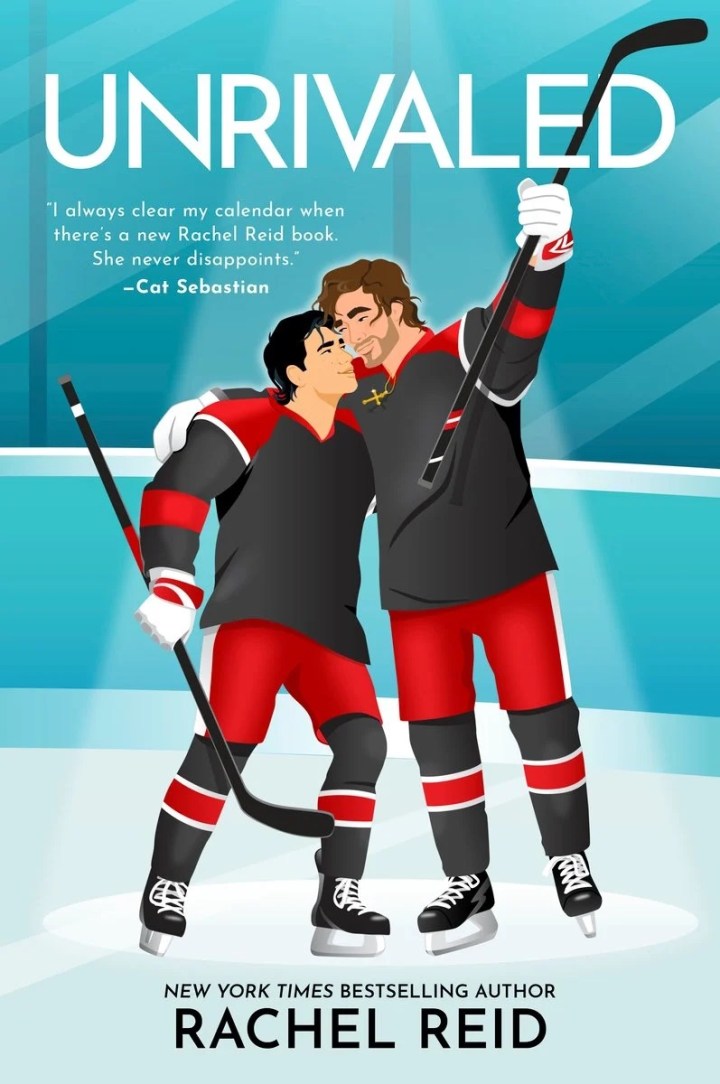
Just because “Unrivaled” is on people’s minds, there’s an angle I’d like to explore. Like everyone else, I’d like to see plenty of romantic moments between Shane and Ilya, and I also want Shane and Ilya to destroy Shane’s crappy former team now that he’s on the Ottawa Centaurs. I also think, as “The Long Game” concludes with Ilya starting antidepressants, it might be interesting to explore how that impacts Shane and Ilya’s intimate relationship. For some people, antidepressants can severely reduce their sex drive, which, considering 90% of Ilya and Shane’s relationship is boinking (the other 10% is fighting), would be a real issue for them to address.
Shane has a lot of eyes on him all the time for reasons beyond how well he plays hockey. He’s one of the few Asian men in the league, in addition to being openly-ish gay in a space renowned for its homophobia (not to mention the secret boyfriend). So yeah, it’s not surprising that he may develop an unhealthy relationship with food, as it’s one of the few things he can control. Although Shane easily breaks his diet in “The Long Game,” I think the truth is that if he’d been on a diet devoid of dairy and simple carbohydrates for months, then any deviation from it would make him sick. His diet may have been symptomatic of his need to be perfect for his beloved sport, but I found myself easily understanding his mentality. Like kudos to Ilya for being able to smoke cigarettes and eat McDonald’s and still play hockey and f*ck like a god, but that’s rarely the case for other people. Ilya needed to stop ragging on Shane for eating rabbit food and show him a little compassion. I hope that Reid chooses to explore this more in “Unrivaled” because I think it would be a more honest reflection of how healing a poor relationship with food is not a linear process.
Although beyond that, I’m not entirely sure what I hope to see. The thought of them retiring bums me out, even though the boys will be in their 30s, which is hockey middle-aged. Normally I would say them having kids is cliché, but considering the many hurdles same-sex couples have to jump over on the road to parenthood, I think there would be a lot of potential in that storyline. Despite the many fanfics I’ve read and Ilya’s best efforts, Shane won’t be getting pregnant anytime soon.
If you’ve read this far, I’m curious: which book did you like the most, and what do you hope to see in Rachel Reid’s (and Jacob Tierney’s) future works?


2 thoughts on “Let’s Rank Rachel Reid’s “Game Changer” Books (and Speculate about “Unrivaled”)”