
Heyo, for those not in the know, one of the topics I’m incredibly interested in is “Media Literacy.” If I had to describe “Media Literacy” for the average folk, I would say it’s “How to Know When the Media is Bullsh*ting You.” A more formal definition of Media Literacy would be the ability to access and analyze messages in the media and understand the source of those messages and their intention.
As it is Media Literacy Week, I thought I would give all five of my subscribers a little lesson in this subject. NAMLE has some fabulous resources if you’re looking to learn more about this subject (or if you’re a teacher and don’t know what to do with your students this week).
Every single person, group, organization, and political body has some perspective and motivation when creating a message. Nothing is created in a vacuum, and no message explodes fully into being without coming from something. The “same” message from two different somethings can result in wildly different messages. For example, the reporting from “The New York Times” and “Fox News” may both have information about the ongoing conflict between Israel and Hamas (and the poor people caught in the crossfire), but each news outlet will say something different.
Something you should keep in mind when encountering any message is how that message makes you feel. Misinformation thrives on an emotional response like glitter thrives on sticking to every surface it encounters. If you watch something in the news, or see something on social media that sparks an emotional response in you (especially fear, sadness, or anger). It’s a good idea to take a moment and research what it is you just encountered.
You should also recognize if that media even caused an emotional response in the first place. Emotional intelligence and media literacy go hand-in-hand.
So let’s say you encounter some crap on TikTok. Does anyone remember that Wayfair conspiracy from 2020? It ruined my TikTok feed for days, so now you’ll have to hear about it. This conspiracy made horrible claims that Wayfair was involved in sex trafficking, which, like most conspiracy theories, was false. I remember my For You page was saturated with videos claiming that Wayfair was selling young girls under the guise of strangely named storage lockers. This conspiracy theory helped no one, especially not victims of sexual trafficking, but it did make a few creators on TikTok feel important.
Horrible stories like this capture people’s attention. Unfortunately, we all tend to rubber-neck and insert ourselves in other people’s tragedies. Whether it’s because we’re too curious for our own good or because we enjoy the catharsis of learning about a tragedy without having to experience it.
With Media Literacy, these feelings are something you have to acknowledge so that you can think clearly past them. Anyone who approached that story rationally would realize the Wayfair Conspiracy made no sense and was based on pure speculation.
There are a lot of reasons why people embrace conspiracy theories. It’s not something that I’m an expert in, nor do I have the ability to stop people from believing in them. But, developing basic media literacy skills is one of the first steps to avoid being taken in by a compelling story.
A great skill to develop is called “Lateral Reading.” From my understanding, Lateral Reading is about deepening your reading experience, and it can really come in handy in odd situations.
Say you watch a “documentary” on Animal Planet explaining the existence of mermaids, and the deep governmental conspiracy to cover up their existence. You watch “Mermaids: The Body Found” and are swept away by this new reality: Mermaids actually exist! The ocean is full of wonders! Our sea brethren await rediscovery!
Except you probably missed the teeny tiny disclaimer at the beginning of the movie explaining that “Mermaids: The Body Found” is a work of fiction. These mermaids are not real. There was no government cover-up of Mer-people’s existence. Aquatic Ape Theory holds little weight in the Anthropological community (at least when I did my report on it a decade ago). The people in this movie are actors, and you can find their IMDB profiles. The mermaid website created by a “Former NOAA” scientist is not real.
I bring up this mermaid documentary not just because it’s a fabulous example of rampant misinformation that spread within the scientific community but for an even sadder reason. When I was still in college, I had to be the one to inform my grown-ass cousin that mermaids weren’t real and he’d been tricked by a fake documentary.
Do you know how bad it feels to be the one to tell someone that mermaids aren’t real?

“Lateral Reading” is about doing your diligence to make sure what you’re reading is legitimate. Just so that you have the opportunity to practice this skill, I’m going to re-share a message of a screenshot I received at the beginning of the COVID-19 Pandemic. (I previously shared this in my post about switching careers and the message has been mostly debunked)
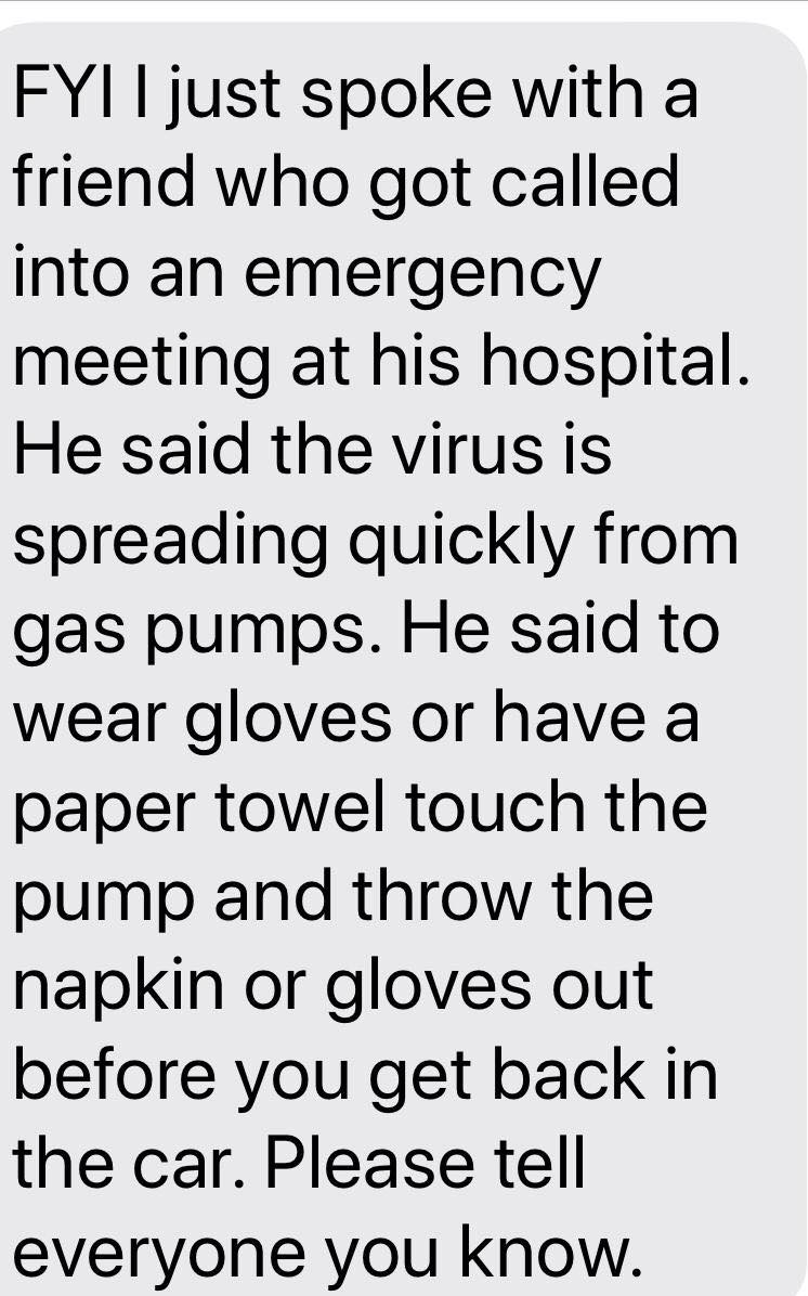
There are other easy ways to see if the message you’ve encountered is legitimate:
- Does it sound completely wild and out of the realm of possibility? Then it just may be.
- Can you see who created the message? If you don’t know who wrote the message then it could have been created by anyone.
- Does the message urge some immediate action? That’s a red flag.
- Check out these other questions you can ask yourself from this post on “Expanding Your View With Lateral Reading.”
Whenever the news inspires some emotional response, you should check that feeling before doing anything drastic. Unfortunately, in this modern political setting, it’s incredibly easy for misinformation and disinformation to spread rapidly.
If you fall for misinformation, it doesn’t mean that you’re a bad person. Whoever created that misinformation just successfully pulled your heartstrings or incited your rage at an injustice. This act of manipulation doesn’t mean the creator is evil; they’re just trying to get a reaction out of you.
Media literacy gives you the tools to not have that immediate reaction. It gives you the ability to process what you’ve seen and compose an appropriate response. It’s empowering.
The more you practice media literacy, the better you’ll get at it. And then you won’t be the embarrassing family member anxiously spreading misinformation on Facebook.
 Happy Hagfish
Mermaids are fictional?! Oh, I bet you don’t believe
LikeLike
You’re right; I don’t believe
LikeLike
Great article with vivid examples! Thank you!
LikeLike
Thank you so much! The “Mermaids” thing is so interesting to me. Animal Planet and Discovery Channel really tricked a lot of people into believing in fictional creatures.
LikeLike
– I don’t get conspiracy theories. I have a few close people in my life who believe in conspiracies, and I don’t comment. It’s in line with that argument of “who is responsible” for teaching media literacy. Vast majority of people refuse to listen to reason because I think conspiracies feed into what they want to believe not necessarily what is the truth.
– There was a professor at undergrad, Professor Wasserman, who said something that stuck with me. It stuck with me such that I remember his name from 13 years ago. He said to not rely on one source, even if it’s him and he was a co-author of a 600-800 page textbook we had to buy. He said to look at multiple sources about a topic or question you have and basically make a consensus. One source is not enough!
– Also, that Wayfair conspiracy is so awful!
LikeLike