
Content Warning: The following post makes mention of several serious topics, including the struggle to survive in harsh conditions and death. It may be a bit unsettling for some readers, especially parents of young children.
For you poor troglodytes who have never encountered this series, “Little House on the Prairie” is a series of semi-autobiographical children’s books penned by Laura Ingalls Wilder (and heavily edited by Rose Wilder Lane). The stories detail young Laura’s life in the woods of Wisconsin in the 1800s, all the way to the first few years of her marriage to Almanzo Wilder.
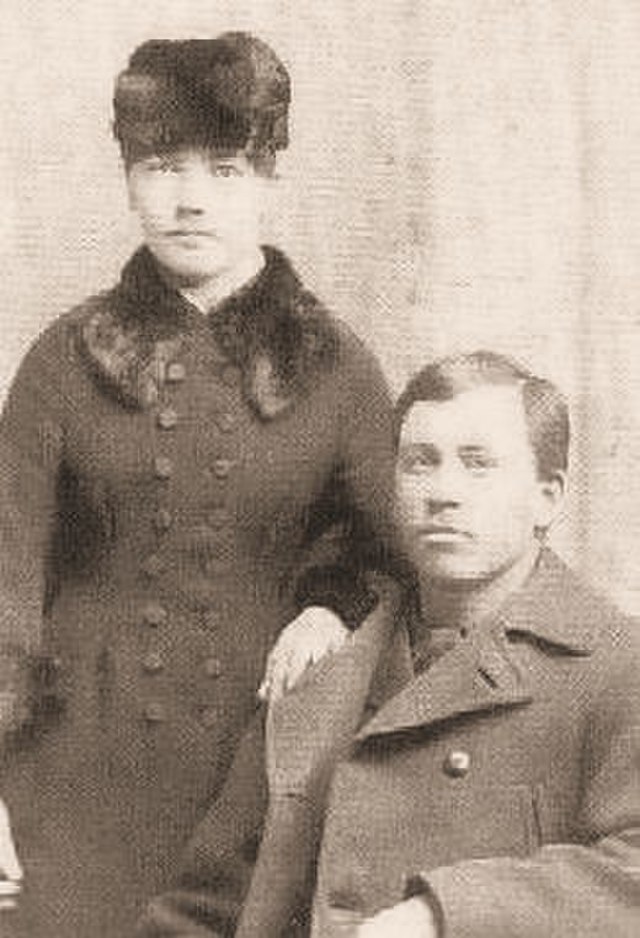
While the series is certainly dated, there are elements of the books that hold quite a bit of value. The stories told within Wilder’s books emphasize the joys of simple pleasures in life while also championing the value of hardwork, loyalty, and kindness. Yes, the books have an aggressive libertarian stance that I’m not completely on board with, but for the most part, the series is full of charming, encouraging tales for children.
Just because these books are for children does not mean they’re wholly devoid of conflict. Laura’s life as a young pioneer girl was dangerous. She and her family often struggled to survive in a harsh, unforgiving environment. The Ingalls had to contend with starvation, blizzards, and clouds of grasshoppers so thick you’d think they were one of the ten plagues of Egypt. Wilders’ stories dealt with difficult topics like isolation, uncertainty, disease, and death. She even writes about the tragic passing of her infant son, who was gone before his parents could name him.
And ya’ll, that’s just what she included in a book series for children. Wilder left out tons of crap about her life. She deliberately omitted a story about her father, Charles Ingalls, banding together with a group of men to hunt “The Bloody Benders.” According to Laura, Pa Ingalls was unsuccessful in his vigilante crusade. However, as I have seen pictures of this man, I can say with 100% certainty that Charles Ingalls has killed someone at some point in his life. No one looks that grizzled to be a simple farmer who plays the fiddle.

So when I found the book “Little House on the Wasteland” by Laura Ingalls-Wei (who is a fictional character) and “translated” by Christopher McElwain (the actual author), I wasn’t put off by the title. The Ingalls went through some stuff; putting them in a Wasteland isn’t far from their reality.
The book “Little House on the Wasteland” follows young Laura Ingalls and her family as they move out of their cozy cabin into post-apocolyptic ruins of the Old Merican Empire. Her father, Charles, dreams of traveling to “the Wastes,” a fertile, wild country out west perfect for growing soy crops. The family must travel across this dangerous country, risking encounters with wild animals, warlords, religious zealots, and zombies, eventually reaching the promised lands.
While reading this book, what really struck me was how remarkably similar in tone this book was to the original story by Wilder. McElwain did an impressive job at matching Wilder’s straight-forward but detail-oriented style. Much like in Wilder’s series, this story is also told entirely from Laura’s perspective, and as such, it focuses on the details that a young girl on a journey might focus on. The narrative pays attention to the food Laura ate, how she felt uncomfortable sitting in a wagon for too long, and the simple joys she experienced while on this journey.
The title is obviously meant to be a joke. “Little House on the Prairie” is renowned for its wholesomeness, and so to place the characters from “Little House” in a “Mad Max“-inspired post-apocalyptic wasteland feels ridiculous. Except, as I’ve pointed out before, “Little House” can go hard. The Ingalls family blends into the environment extremely well. Just like the Ingalls had to contend with danger and lawlessness in the 1800s, they would have to do the exact same thing in the distant future.
The other “joke” from this book is less of a joke and more of a genuinely interesting twist on the post-apocalyptic genre. Generally, in post-apocalyptic fiction, the story will focus on the fighters, movers, and shakers. Characters like Mad Max, Robert Neville, and Joel Miller tend to take center stage. Those characters are interesting, but we’ve heard their stories before. They’re lone wolves in a dangerous, unrecognizable world, and they’re usually running away from some horrible tragedy and blah blah blah they have a chance at redemption.
I think the strength of this book is that because it is told from the perspective of a young child, and it’s so in keeping with the tone of “Little House,” the tale itself is actually quite warm and optimistic. Even though the Ingalls are traveling through a world littered with cannibals and zombies, they’re still a family. They tell each other stories, explore, and enjoy their favorite meals together. The story is a lot cozier than you’d expect for one punctuated with the occasional zombie appearance.
If you’re looking to read a post-apocalyptic tale about the people who learned to farm, sew, and can food, and who want to live in peace, then I think “Little House on the Wasteland” might be the book for you.
Also, by setting this book in the distant future amongst the ruins of the United States, McElwain could avoid perpetuating some of the outdated prejudices present in Wilder’s original narration. Although Laura Ingalls Wilder probably didn’t intend to write a racist story, she still did. McElwain’s story is set in a world where equal marriage is legal, women can hold positions of power, and racism no longer exists (I hope). The progressive social norms of this post-apocalyptic society were a refreshing change of pace.
If I were to level any criticism at this book, it would be that the ending feels incomplete. In the original “Little House on the Prairie,” the Ingalls are forced to leave their new Kansas home because they were squatting on Osage land. In “Little House on the Wasteland,” the Ingalls face different difficulties than their historical counterparts. I won’t spoil the ending for any interested readers, but I got the feeling from how the story ended that McElwain intended to continue these books as a series.
The ending felt incomplete. McElwain went to great lengths to create a post-apocalyptic world with a new mythology, complex politics, and economic system that feels like a waste (no pun intended) to not further the series.
There was also the issue of trying to figure out who wrote this book in the first place. The book’s author is listed as “Laura Ingalls-Wei,” and the epilogue mentions the man who will one day be her husband. The “author’s” bio mentions this husband in present tense, but nowhere else does the character appear. It all leads me to believe that McElwain planned for additional books in this series that would have introduced this character.
It’s possible McElwain wrote this whole book as a joke, but it’s an extremely elaborate joke with a punchline that only a few people will understand. The truth is, this story worked. A family of pioneers on a journey through the ruins of America set off to find a new home, told from the perspective of the young daughter. I would like to see how this story continues. I’m curious if McElwain planned for the series to follow the events of Wilder’s series (including events like the arrival of Baby Grace, the long winter, and Laura’s brief career as a school teacher) or if the books would charge a new path.
Would Laura grow up to become a teenage zombie killer? Would we ever learn the origins of Jack the Pigdog? Would the Ingalls ever find a place to call home? I need to know the answer to these questions!
This book was published in 2019, and I’ve heard no news that Christopher McElwain plans to “translate” another one of Laura Ingalls-Wei’s memoirs. I cannot find any kind of social media presence for this guy. I could barely locate the Instagram account for the person did the illustrations for the book. It’s like he doesn’t want to be associated with the book, or it was all published under a pseudonym. I’m not sure. My hope is maybe he’ll see this blog and realize that some people want him to continue the story.
 Happy Hagfish
Hard to be
LikeLike
I thought Charles Ingalls really went to prison and got tatted till I scrolled down to the caption LMAOOOOOOO
I read the series in elementary school and did a book report on it, but that was definitely 20+ years ago
LikeLike