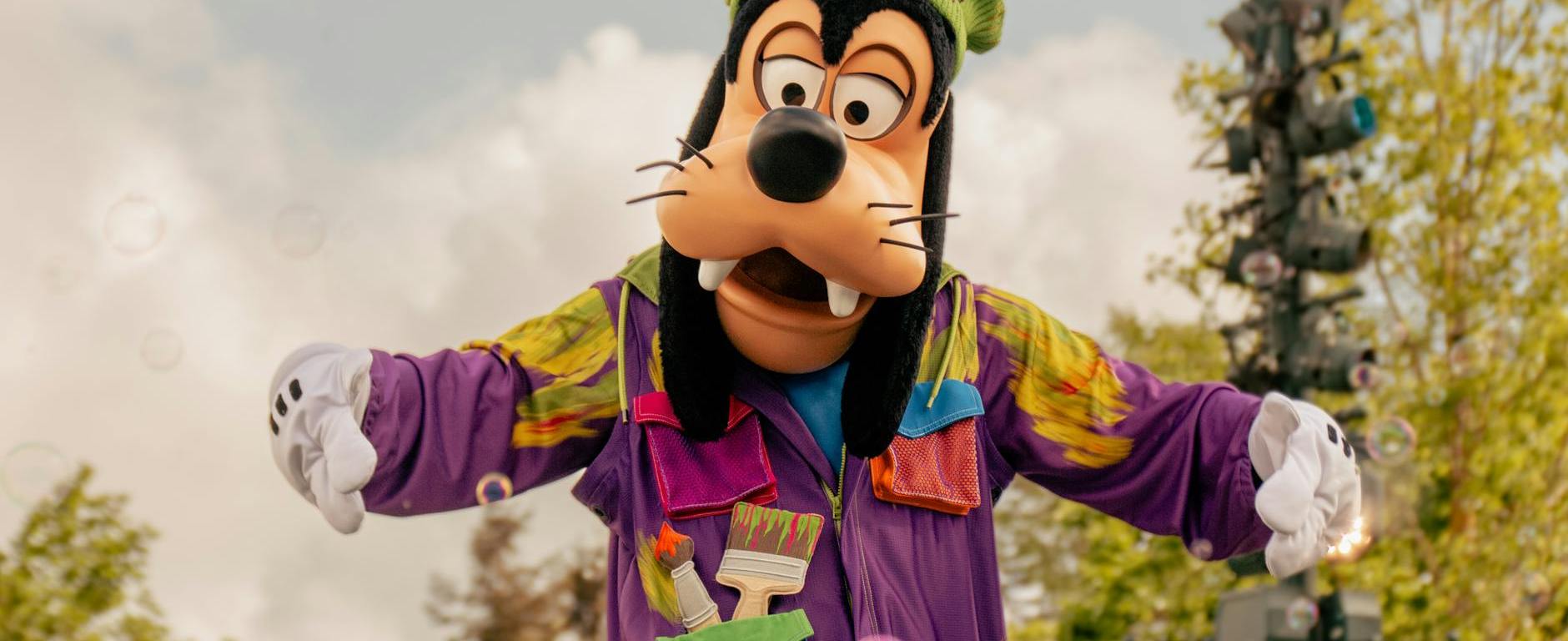
Four months into 2025, and this has already been a lousy year, but it has had its bright spots. Flowers are blooming, the birds are singing, and “A Goofy Movie” is celebrating its 30th anniversary.
For those living under a rock, “A Goofy Movie” debuted in 1995 to mixed reviews from critics, but in the last thirty years, it has become something of a cult classic. The story, which is a sequel of sorts to the show “Goof Troop,” is about single dad Goofy and his changing relationship with his teenage son, Max. Max is growing up and experiencing personal changes that are causing him to drift emotionally from his well-meaning but clumsy father. Max is also crushing hard on a pretty girl at school named Roxanne, and his life revolves around trying to get this girl to like him back (which she totally does).
Although the movie wasn’t a huge hit back in 1995 (I don’t think I would compare its reception to something like “Frozen”), the movie has been re-evaluated, and I would like to suggest it’s one of Disney’s best original movies. In honor of the 30th anniversary, Disney has released a documentary, “Not Just a Goof,” that reviews the making of the movie, as well as its enduring legacy.
On a personal note, the last few weeks have been difficult. I recently lost my grandma, who was one of my few living family members, and then I lost my job, and then our family dog, Walter. To say that all I’ve wanted to do for the past few weeks is rot in bed would be an understatement. But last night, my dad requested that we watch something on Disney+ together, and when I saw “A Goofy Movie” pop up on the screen, I knew it would be the perfect movie for lifting my spirits.
I think there are many reasons why “A Goofy Movie” has stood the test of time. For starters, the story itself is very low stakes: Goofy wants to take his son on a vacation so they can bond, but Max only cares about impressing Roxanne. So much of the tension in their relationship comes from Goofy trying to exert control over Max and not giving him the space to be himself. Meanwhile, Max is too harsh towards his dad, and part of his story is realizing that his dad loves him and just wants to be part of his life. The two don’t have a perfect relationship, but no one does, and watching Max and Goofy learn to communicate with each other despite their differences is both relatable and heartwarming.
This feels like a good moment to mention that my dad spent half of this movie messing around on his phone, and every few minutes, I would shout at him, “YOU’RE MISSING THE STORY!” or “THIS IS IMPORTANT!” so not everyone who watches this movie will walk away having learned something.
It’s also worth mentioning that the soundtrack is full of bangers, especially the songs “Stand Out” and “I 2 I” by the fictional musician Powerline (performed by Tevin Campbell), who deserves his own movie/album. And while those songs are excellent, the other musical numbers play an important role in furthering the story and explaining the characters to us. “After Today” is sung at the beginning of the movie and details Max’s desire to step out of his dad’s embarrassing shadow and impress Roxanne. “On the Open Road,” while not nearly as impactful as “Moving Right Along” in terms of songs on my road trip playlist, shows how Max and Goofy are in opposition (not quite seeing “I 2 I,” if you will). And “Nobody Else But You” is a sweet number about a father and son who may be very different but love each other.
There are other elements of this movie that I think deserve praise. Both Max and Goof are portrayed by actual voice actors Jason Marsden and Bill Farmer, respectively, who played their characters with a lot of enthusiasm and heart. Voice acting is a different skillset from playing a character in a live-action show or movie, as it often requires an actor to stand alone in a recording studio with no props, setting, or other actors to work with, so actors unused to this set-up sometimes come off as wooden or inauthentic.
The “contemporary” setting of the movie also makes it a fun time capsule of life in the 90s. Throughout the movie, viewers will notice little details that are appropriate to the story but no longer relevant to modern life. For example, a huge conflict in the movie comes from Max erasing the hand-drawn lines on his father’s map, and rerouting the trip to Las Angeles, a conflict that would be nonexistent for a movie set in 2025, as most people would instead rely on their phone’s GPS. Other details, like cassette players, car cigarette lighters, and the distinct lack of modern phones, add to this movie’s nostalgic appeal.
If any lessons are learned from “A Goofy Movie,” I hope that it’s about the importance of telling small, slice-of-life stories. If they’re told authentically, with a clear vision (which I’ll attribute to director Kevin Lima and the dedicated writing staff) and a willingness to embrace the often uncomfortable and awkward realities of life, then those stories will live on.
“A Goofy Movie” temporarily lifted me out of my funk, and I hope that if you’re feeling down, then you experience similar results. Watching “A Goofy Movie” won’t solve every problem in your life, but it is a good reminder to value the relationships we often take for granted and the importance of letting your loved ones be themselves and accepting them for it.
 Happy Hagfish
I’m very sorry for the loss of your Grandma and your dog too. Keep taking care of yourself. ❤
LikeLike
Thank you for your kind words. It’s been a hard few weeks but I appreciate how thoughtful people have been.
LikeLike